Skip to content

3D Printing & Prototyping

3D printed component

U.S.-Based Rapid Prototyping and 3D Printing, From First Concept to Short Run

DEM Manufacturing provides prototype manufacturing services entirely in-house at our Ohio facility, inside the same ISO 9001:2015 and ISO 13485:2016 quality systems that govern our production work. Domestic prototyping keeps your designs, files, and iterations on U.S. soil and inside a compliant environment, which matters for defense and medical programs where controlled data cannot leave a secure chain of custody.

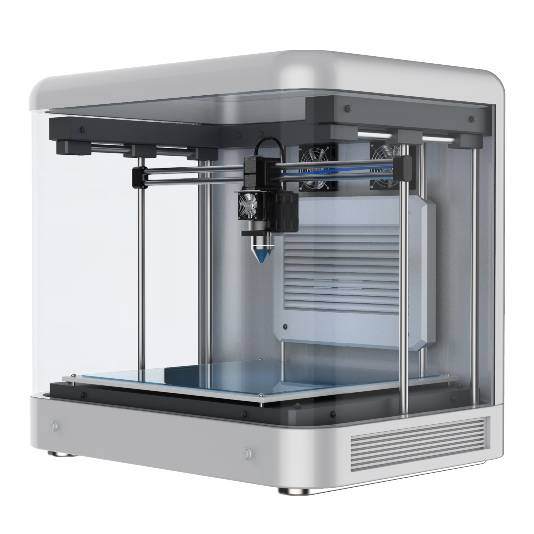
Our additive manufacturing brings product concepts to life quickly and with low risk. Using stereolithography (SLA) and carbon filament technologies across 10 3D printers on site, our rapid prototyping services let you refine and test concepts before investing in production tooling. From early proof of concept prototyping through short-run production, we help you validate fit, form, and function when changes are cheapest.

  • Complex designs with intricate details
  • Smooth production of single parts or larger runs
  • Durable parts built to withstand tough conditions

Innovating Manufacturing With 3D Printing

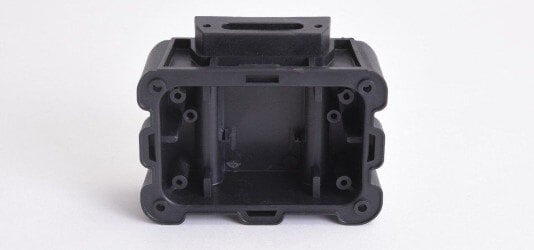
3D printing is core to our operations. We use it to produce functional and non-functional components, tooling molds, and complete production-scale products. This technology enables small production runs with production-level quality, reducing time and cost while holding precision steady. Our 3D printing capability supports everything from a first 3D printing prototype to bridge manufacturing.

3d printing for fast prototyping
DSC_1300a
DSC_1311a
DSC_1301a
We help you bring ideas to life quickly, from initial prototypes to full-scale production.

High-Volume Capability

With 10 printers on site, we handle larger production volumes without sacrificing speed or quality, supporting pilot builds and short-run production.

Wide Material Selection

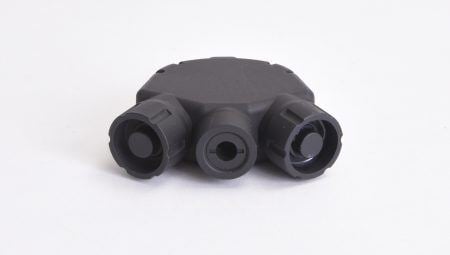
We provide a broad range of materials, including fiberglass-reinforced, carbon fiber-reinforced, fire-retardant, and translucent options.

Fast Iterations

Our rapid product prototyping lets you quickly refine and test concepts, helping you move from idea to production faster.

Versatile 3D Printing Solutions for Every Project

Stereolithography (SLA)

  • High-precision prints with smooth finishes
  • Fast turnaround times
  • Handles tight tolerances and complex geometries
  • Wide range of resin options, including translucent and specialty materials

Fused Deposition Modeling

  • Versatile materials, including carbon fiber-reinforced and fire-retardant options
  • Capable of printing large or multiple parts in one run
  • Strong, durable prototypes and end-use parts
  • Cost-effective production of large or multiple components

From Concept Prototyping to Validated Design

Speed in prototype manufacturing is one of the biggest accelerators in early development. By producing functional samples in as little as a few hours when the right CAD models and materials are in place, DEM compresses the feedback loop that traditionally slows programs down. Our in-house prototype validation services then confirm key performance features before you commit to tooling, so engineering prototypes move to production with fewer surprises.
Whether you need SLA prints with smooth finishes and tight tolerances or durable carbon filament parts for fixturing and testing, our engineering team matches the right technology to your project. When you need domestic printing prototype capability that scales from concept prototyping to volume, our rapid, integrated process keeps you moving. Talk to one of our experts today.

FAQs

1. How can 3D printing prototyping accelerate my product development?

Our in-house 3D printing prototyping capabilities let you quickly test and refine concepts before investing in production tooling. We help reduce lead times and design risk by enabling early feedback on fit, form, and function.

2. What materials are available for 3D printed prototypes?

DEM offers a range of engineering-grade materials, including fiberglass-reinforced, carbon fiber, flame-retardant, and translucent options that are ideal for both functional models and high-resolution 3D printing prototyping.

3. Can DEM support higher-volume runs with 3D printed parts?

Yes. While many firms focus only on single prototypes, DEM has the capacity to handle short-run 3D printing production using our fleet of SLA and carbon filament printers. Typically, pilot builds, field testing, or bridge manufacturing find this most useful.

4. How fast can your rapid prototyping turn around a functional sample?

With the right CAD models and materials in place, our rapid prototyping can produce functional samples in as little as a few hours, using 10 3D printers on site to compress the early feedback loop.

5. What kind of prototype validation do you perform before moving to production?

Our in-house prototype validation confirms key performance features through functional testing before you commit to tooling, so design issues surface early, when changes are cheapest, rather than after production begins.

6. Is proof of concept prototyping useful if our design is still changing frequently?

Yes. Proof of concept prototyping is built for early, fast iteration, letting you test fit, form, and function and refine a changing design quickly before investing in production tooling or committing to a final direction.

7. What 3D printing technologies does DEM use?

DEM uses stereolithography (SLA) for smooth, high-resolution parts and carbon filament printing for durable components, running 10 printers on site with materials including fiberglass-reinforced, carbon fiber-reinforced, fire-retardant, and translucent options.
8. Can DEM use 3D printing for production, not just prototypes?

Yes. DEM uses additive manufacturing for short-run and bridge production at production-level quality, useful for pilot builds and low-volume parts before committing to high-volume tooling.

9. Is DEM's prototyping done in the USA?

Yes. All prototyping happens in-house at our Ohio facility within ISO 9001 and ISO 13485 quality systems, keeping your designs and controlled data domestic, which matters for defense and medical programs.